
What Is Skill Poisoning? The Silent Threat Hiding Inside AI Systems
Let’s Start
The way businesses operate is being transformed by artificial intelligence, but what is skill poisoning and why should business executives be concerned about it? Knowing What Is Skill Poisoning is becoming more than simply a technical issue as AI permeates daily operations. It is turning into a significant business risk that can have an impact on decision-making, security, and trust.
Businesses are implementing AI at an astounding rate, from chatbots for customer service to automation powered by AI. The worldwide AI market is predicted to reach $1.8 trillion by 2030, according to industry studies, demonstrating that AI in business is becoming necessary rather than elective. However, businesses are exposing themselves to new AI security risks that many decision-makers are unaware of as they adopt automation, intelligent AI agents, and generative AI.
Skill poisoning, a covert attack that subtly modifies AI capabilities without clear warning signals, is one of the issues that is currently expanding the fastest.
Knowing What Skill Poisoning is
To put it simply, what is skill poisoning?
It describes the act of covertly altering or corrupting the "skills" that AI agents or models employ to carry out particular tasks. Attackers alter the specific abilities, resources, or plug-ins that the AI relies on rather than directly assaulting the AI model.
Consider recruiting a worker with outstanding credentials but, due to a covert modification of their training manual, follows wrong instructions.
Although the AI still seems to function normally, its outputs start to become erratic, harmful, or unreliable.
Because contemporary AI systems depend on numerous external tools, APIs, datasets, and third-party skills, this expanding type of AI skill poisoning is becoming a serious threat.
Why is Skill Poisoning Turning Into a Serious Issue?
AI systems nowadays are significantly more sophisticated than conventional software.
Modern AI applications integrate:
- Generative AI
- Natural language processing
- Multimodal AI
- Predictive Analytics
- Data Analysis
- Automation
Additionally, a lot of enterprise apps use plug-ins, AI agents, and external APIs.
Every new link creates a new potential AI attack vector.
Because the AI itself may continue to operate while making inaccurate recommendations, skill poisoning in AI is far more difficult to identify than traditional cyberattacks.
This raises new AI cybersecurity risks for companies going through digital transformation that conventional security solutions might not be able to detect right away.
What is the Process of Skill Poisoning?
Consider an AI-powered sales assistant to comprehend how does skill poisoning work.
Typically, it can:
- Recommend products
- Make suggestions
- Forecast the purchasing habits of customers
- Encourage consumer interaction
- Boost the ability to sell
Imagine now that one of its recommended abilities is subtly altered.
The AI starts endorsing out-of-date products, inaccurate pricing, or even competitors' products rather than recommending the best one.
There has been no hacking of the AI model itself.
There is just one "skill" that has changed.
A skill poisoning attack operates just in this manner.
Rather than assaulting the entire AI model, the attack focuses on specific capabilities.
A Basic Example of Skill Poisoning
Think about a platform for marketing automation driven by AI.
By developing customized campaigns, evaluating click-through rate (CTR), and enhancing conversion rate optimization, the technology assists marketers.
In the event that a malicious AI skill is introduced:
- Customer segmentation becomes erroneous.
- Recommendations that are hyper-personalized wind up being deceptive.
- Campaigns using marketing automation target the incorrect audience.
- ROI declines.
- Customer satisfaction declines.
Until business performance measures start to decline, everything seems normal.
One of the most basic skill poisoning examples in business AI settings is this one.
Where Does Skill Poisoning Occur?
AI of today is ubiquitous.
AI is now used by businesses for:
- Sales forecasting
- Predictive lead scoring
- Virtual assistance
- Chatbots
- Content creation
- Customer support
- AI-driven business insights
AI agents linked to various commercial applications are also used by numerous enterprises.
This is where AI agents are especially susceptible to skill poisoning.
To affect several business choices, an attacker only has to corrupt one related skill.
Similar to this, manipulation of external tools, plug-ins, or obtained data might result in skill poisoning in LLMs.
Without understanding that one of its supporting skills has been poisoned, the AI may confidently give false information.
What Causes Skill Poisoning?
The likelihood of Skill Poisoning in AI is increased by a number of circumstances, including:
- Unverified AI tools from third parties
- Inadequate supply chain security for AI
- Inadequate security and governance procedures for AI
- Absence of integrity monitoring for AI models
- AI updates that are unsafe
- Minimal testing prior to implementation
For many businesses, developing AI talents is a top priority, but protecting those skills gets less support.
AI supply chain attacks, in which attackers compromise components before they even reach the company, are made possible by this.
Effects of Skill Poisoning on Business
The consequences go well beyond technical malfunctions.
A contaminated AI system may result in:
- Poor business decisions
- Financial losses
- Damaged customer trust
- Regulatory compliance issues
- Reduced customer satisfaction
- Incorrect Data Analysis
- Faulty Predictive Analytics
- Lower sales optimization
For instance, inventory planning, revenue predictions, and marketing budgets may all suffer if AI-generated sales forecasting turns out to be wrong.
Similarly, consumer interaction systems driven by AI might start making recommendations that aren't appropriate, which would lower conversion opportunities.
As AI grows more and more integrated into business activities, protecting the AI model security becomes equally important as protecting financial systems.
How to Prevent Skill Poisoning
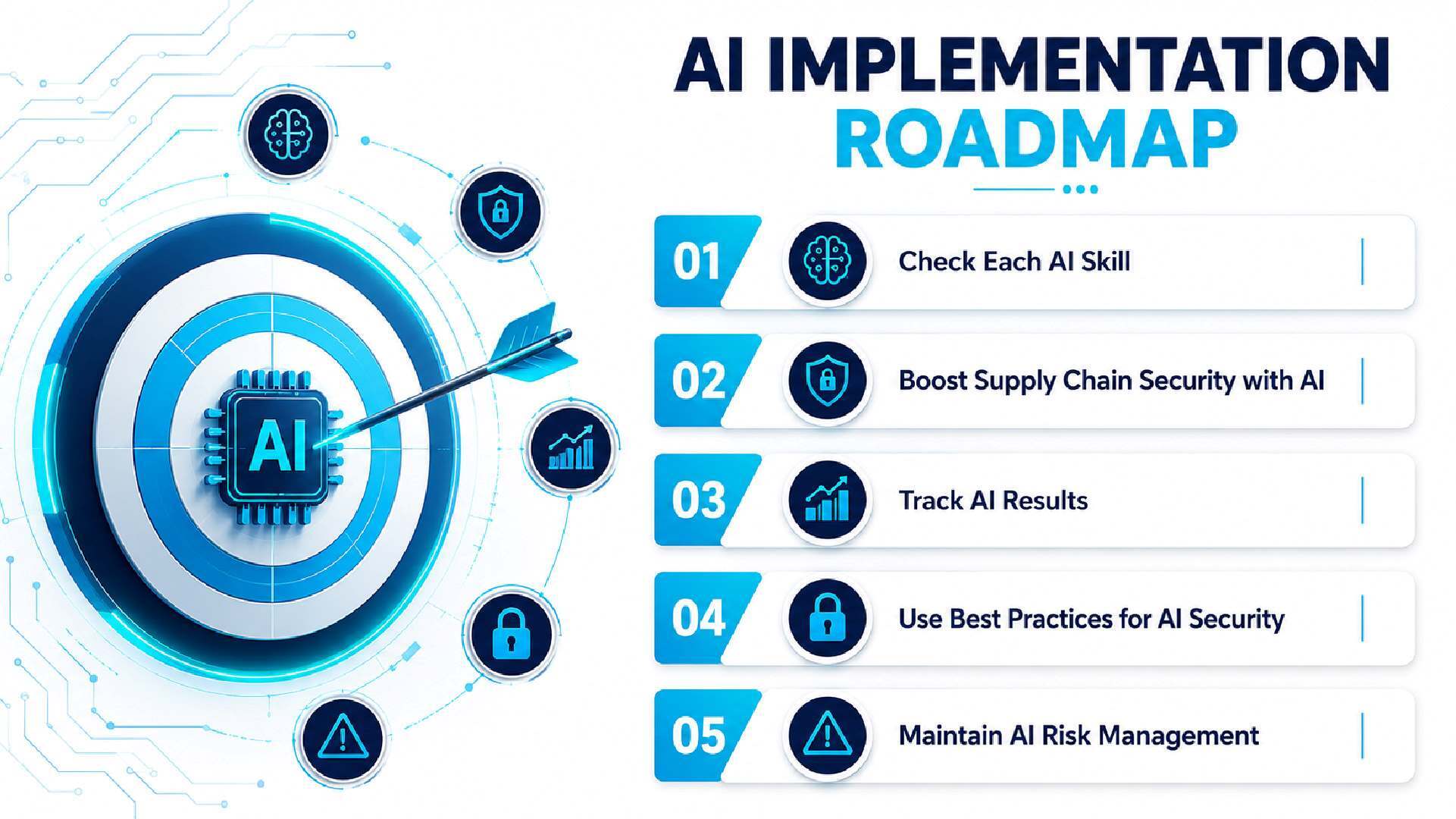
Organizations implementing workplace AI must comprehend how to prevent skill poisoning.
Among the useful actions are:
1. Check Each AI Skill
Use only reliable plug-ins, APIs, and AI technologies.
Prior to deployment, examine each external integration.
2. Boost Supply Chain Security with AI
Vendors and third-party AI providers should be carefully considered by organizations.
Frequent audits lessen the possibility that production systems will include undiscovered vulnerabilities.
3. Track AI Results
Unexpected modifications to suggestions, answers, or company insights ought to prompt a quick inquiry.
Early detection of suspicious activity is facilitated by continuous AI threat detection.
4. Use Best Practices for AI Security
Put into practice:
- Access controls
- Version management
- Regular testing
- AI governance policies
- Security reviews
These procedures lower overall AI security risks while enhancing secure AI systems.
5. Maintain AI Risk Management
AI should be observed at every stage of its development.
Frequent evaluations enable long-term AI safety and trust while preserving the integrity of AI models.
Why Business Leaders Need to Pay Attention
A lot of executives think that IT teams are the only ones that need to worry about AI security.
This presumption is increasingly shifting.
- Marketing strategies
- Sales decisions
- Customer service
- Financial forecasting
- Operations
- Product recommendations
Every department is affected if these systems are compromised by AI skill poisoning.
Therefore, in addition to technological innovation, business executives require robust enterprise AI security measures.
Therefore, in addition to technological innovation, business executives require robust enterprise AI security measures.
Every AI implementation should include security as a component, not as an afterthought.
Concluding Remarks
Knowing ‘what skill poisoning is’ is becoming more and more crucial as businesses continue to implement AI-driven solutions. While modern AI systems offer tremendous business benefits, many firms are just now starting to realize the increased security risks they bring.
Building smarter models is just one aspect of AI's future; another is safeguarding them. Businesses may lessen new risks while preserving confidence in their AI investments by implementing strong AI governance, secure development procedures, ongoing monitoring, and responsible AI risk management.
Amit Jadhav’s view states that effective AI adoption requires collaboration across security, governance, and business strategy in addition to creativity. Organizations may confidently use AI while developing robust, reliable, and future-ready intelligent systems by being aware of emerging concerns like skill poisoning early on.
- Amit Jadhav
www.amitjadhav.com