
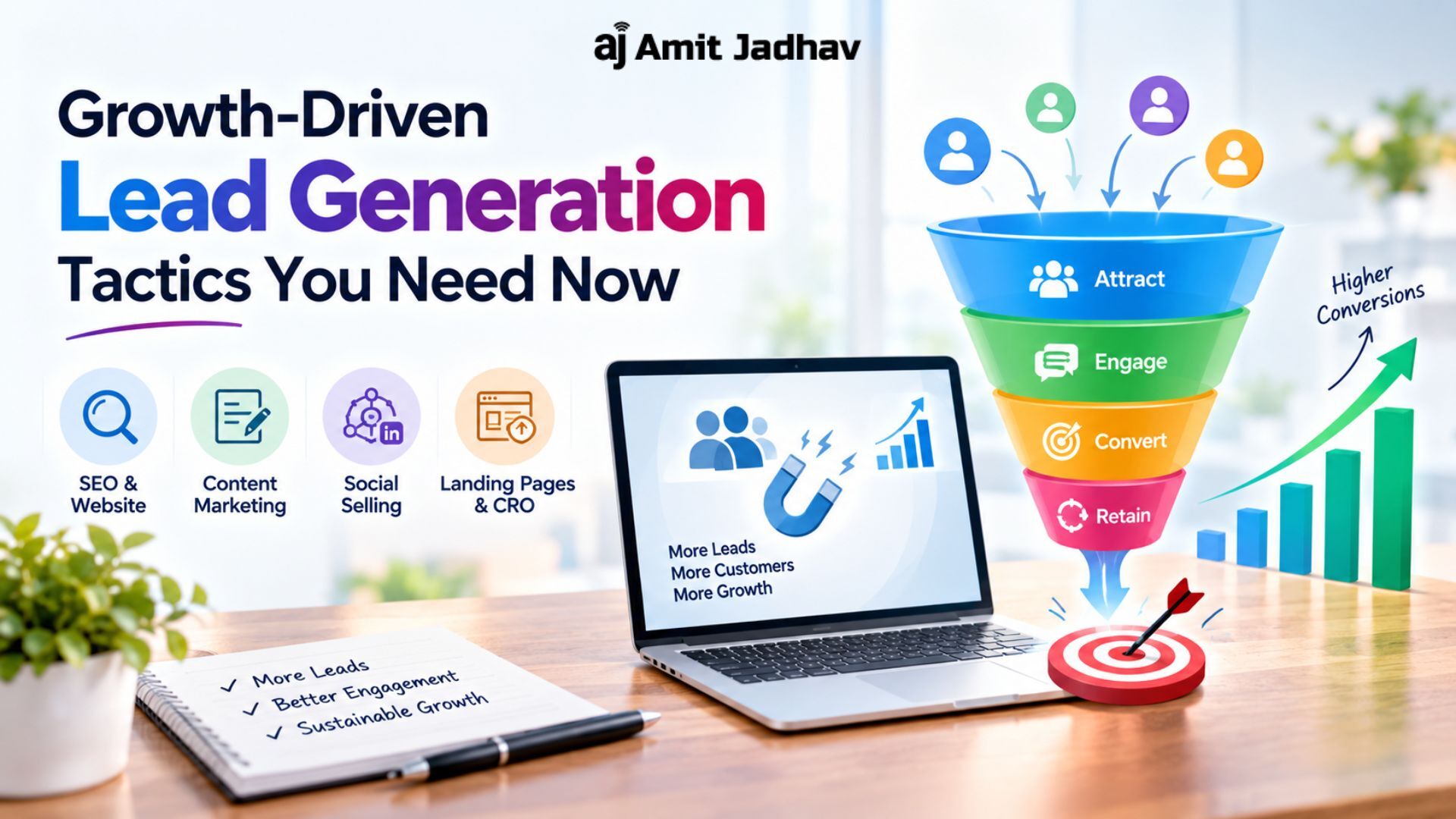
Growth-Driven Lead Generation Tactics You Need Now
Introduction to Lead Generation
Bringing visitors to your website is only the first step. The real challenge is turning those visitors into customers who are willing to buy your products or services. Lead generation is not simply about gathering names and contact details. It involves finding the right audience, earning their trust, and building connections that can lead to future business opportunities.
As customer needs change and market competition grows, businesses must find better ways to reach potential buyers. Depending only on traditional advertising may not be enough to bring regular results. Using digital marketing, personalized communication, sales enablement, and AI-driven tools together can help businesses create a stronger sales pipeline.
Whether you own a small business, lead a marketing team, or work in B2B sales, using the right growth-focused methods can help attract more customers and support steady business growth.
Growth-driven Lead Generation Strategies
Here are some of the growth-driven lead generation tactics:-
1. Create a Strong Online Presence to Reach Potential Customers
Most customers search online to learn about a company before getting in touch with its sales team. A weak online presence can make it difficult for businesses to reach people who may be interested in their offerings.
Begin with a well-designed website that gives visitors a clear idea of your products, services, and what makes your business valuable. Include suitable keywords, share helpful information, and provide simple ways for visitors to contact your team.
Search engine optimization (SEO) also plays an important role in digital lead generation. Find out what your target audience searches for and use those terms naturally across your website. Publishing useful blogs, service-related pages, FAQs, and industry-specific information can help improve your search visibility.
Local SEO is another useful option for businesses that want to connect with customers in particular areas. For instance, companies offering lead generation services in Pune can create location-based website pages and add relevant business details to reach potential customers in nearby locations.
2. Use Content Marketing to Turn Website Visitors into Potential Customers
People are more likely to show interest in a business when they find information that answers their questions or helps solve their problems. This makes content marketing for lead generation an important part of any marketing plan.
Rather than using every piece of content to advertise your offerings, share information that helps readers understand their options and make better decisions.
Here are some content formats worth considering:
- Educational blogs: Share information about common industry problems, customer concerns, and possible ways to solve them.
- Case studies: Explain how your products or services have helped customers achieve better results.
- Videos: Use short videos to introduce products, explain their features, or share customer feedback.
- E-books and guides: Provide useful learning materials that readers can access by sharing their contact details.
- Webinars: Arrange online sessions where industry experts can discuss useful topics and answer audience questions.
According to the Content Marketing Institute's 2025 B2B research, 74% of surveyed B2B marketers reported that content marketing helped them generate demand or leads. This shows why businesses should focus on creating content that offers real value to their audience.
Publishing helpful and relevant content regularly can build trust and encourage potential customers to learn more about your business.
3. Use Social Selling to Build Better Customer Relationships
Social media has grown beyond a platform for sharing company updates and promotional content. Businesses can now use these platforms to find potential customers, connect with industry professionals, and start meaningful conversations.
LinkedIn is particularly useful for B2B companies. Sales professionals can reach business decision-makers, share their knowledge, take part in industry conversations, and develop connections with people who may need their services.
However, successful social selling is not just about increasing followers or sending connection requests. Businesses need to understand what their audience is looking for and share information that matches their interests.
Social media advertisements, engaging posts, short videos, and interactive campaigns can also help businesses connect with a wider audience and improve customer engagement.
These efforts strengthen customer acquisition strategies by helping companies build relationships with potential buyers even before they are ready to contact the sales team.
4. Make Your Website More Effective with Landing Page and Conversion Rate Optimization
Getting people to visit your website does not always mean they will become customers. Your website should guide visitors towards taking the next step, such as filling out an enquiry form, requesting a quote, or booking a consultation.
This is where landing page optimization and conversion rate optimization can make a difference.
Each landing page should have a clear purpose and explain one particular offer or service. Keep the information easy to understand and avoid adding too many links or details that may take visitors away from the main message.
You can improve your landing pages by:
- Using simple headlines that clearly explain the benefits of your offer.
- Placing contact forms and call-to-action buttons where visitors can easily find them.
- Showing how your products or services can meet customer needs.
- Adding genuine customer reviews and testimonials to build confidence.
- Making sure your website works properly on mobile devices and loads quickly.
For instance, a consulting company can create a separate landing page where visitors can request a free consultation instead of asking them to search through the entire website.
Making these changes can improve the visitor experience and encourage more people to take action. Over time, this can help businesses turn website traffic into valuable sales opportunities.
5. Combine Email Marketing with Lead Nurturing Strategies
Not all potential customers are ready to buy as soon as they show interest in a product or service. Some may want to learn more before making a decision, while others might be exploring different service providers.
This makes lead nurturing an important part of building relationships with potential customers and keeping them interested in your business.
Email marketing for leads helps businesses stay in touch with prospects by sharing useful information at different stages of their buying journey. Rather than sending identical promotional emails to everyone, businesses should group their audience according to their interests, needs, and past interactions.
For instance, a prospect who downloads a product guide could receive a series of informative emails. On the other hand, someone who asks about pricing may need a more direct follow-up with product details and sales information.
Marketing automation tools make this process easier by scheduling emails, monitoring customer responses, and sending messages based on specific actions.
A consistent follow-up process helps businesses maintain contact with interested prospects and allows sales teams to recognize enquiries that may be ready for the next step.
6. Improve Marketing Results with AI and Automation
AI in business is creating new ways for companies to manage marketing activities and connect with potential customers. These tools can study customer data, find useful patterns, and provide information that supports better business decisions.
Some common ways businesses can use AI-driven solutions include:
- Predictive Analytics: Study available customer data to identify prospects who may be more interested in buying.
- Predictive Lead Scoring: Rank potential customers based on their activities, interest levels, and signs of purchase intent.
- Chatbots and Virtual Assistance: Answer frequently asked questions and collect basic details from website visitors.
- Generative AI: Help prepare marketing content, draft emails, and suggest ideas for campaigns.
- Data Analysis: Review campaign results to understand what is working and where improvements are needed.
Technologies such as natural language processing and multimodal AI can further help businesses understand customer messages, conversations, and information shared in different formats.
However, AI and automation should make marketing work easier, not remove the need for human involvement. Their purpose is to reduce repetitive work, support accurate decisions, and give teams more time to focus on customer relationships.
7. Bring Sales and Marketing Teams Together for Business Growth
Marketing teams work to attract potential customers, while sales professionals understand their needs and guide them towards a purchase. When these teams do not share information, businesses may lose valuable opportunities.
Working towards common goals helps both departments support customers throughout their buying journey.
Marketing teams can pass on details about campaign responses, customer interests, and the level of engagement shown by different prospects. Sales teams can use this information to have more relevant discussions and decide which enquiries need attention first.
Sales enablement is another important part of this process. When sales professionals have access to the latest product details, customer information, presentations, and useful communication materials, they can respond to enquiries with greater confidence.
Better coordination between these departments can support sales optimization, improve sales forecasting, and create a more satisfying experience for customers.
8. Track Results and Strengthen Your Lead Generation System
The success of a marketing campaign cannot be measured simply by counting the enquiries it brings in. Businesses also need to check how many of these enquiries turn into paying customers.
A well-organized lead generation system makes it easier to measure campaign results, understand customer responses, and find areas that need attention.
Some important performance metrics to track include:
- Conversion Rate: The percentage of visitors or prospects who take the action a business wants them to take.
- CTR (Click-Through Rate): The percentage of people who click on an advertisement, email link, or other online link.
- Cost Per Lead: The average amount spent to bring in one potential customer.
- ROI: The return earned in comparison with the money invested in a campaign.
- Lead-to-Sale Ratio: The percentage of potential customers who eventually make a purchase.
Businesses should review these figures regularly and adjust their campaigns wherever necessary. For example, if an advertisement gets plenty of clicks but generates very few enquiries, it may be worth checking the landing page, offer, or audience selection.
Testing different approaches and learning from campaign results can help businesses improve their lead generation strategies. It also prevents them from continuing to spend money on activities that are not producing useful results.
To get more knowledge, you can check out our comprehensive blog post, “How to Build a Lead Generation System That Converts!”
Conclusion
Growing a business is not just about spending more on advertisements or bringing more visitors to a website. It involves finding the right audience, understanding what they need, sharing helpful information, and guiding them towards a purchase.
Businesses can create a more organized customer acquisition process by bringing together SEO, content marketing, social selling, email campaigns, and AI-powered automation.
Successful lead generation techniques should support clear business objectives and help turn customer interest into real sales opportunities. By keeping track of campaign performance, responding to customer needs, and improving the way sales and marketing teams work together, businesses can build a healthy sales pipeline and support steady, long-term growth.
- Amit Jadhav
www.amitjadhav.com