
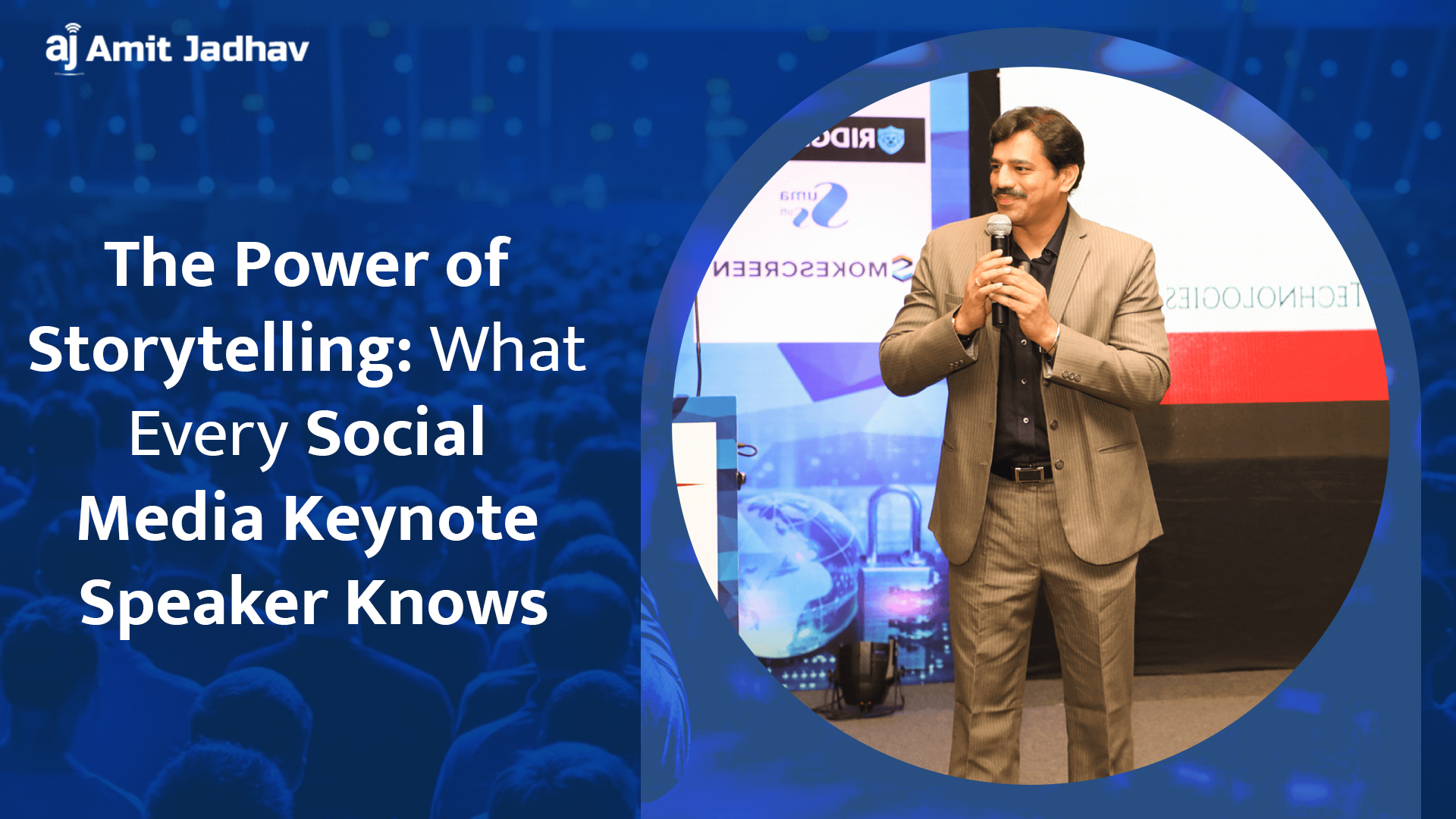
The Power of Storytelling: What Every Social Media Keynote Speaker Knows
Let’s Start
In the fast-paced digital environment of today, viewers remember tales rather than advertisements. Because of this, every effective social media keynote speaker highlights one fundamental idea: storytelling is the most effective weapon available to any brand. The degree to which your message connects with your audience depends on how you convey it, whether it's through leadership through storytelling or digital storytelling for brands.
Social media keynote speakers establish stronger connections with consumers by combining creativity, artificial intelligence, and real-time industry knowledge. For more understanding, read our interesting blog post, “Transform Your Brand with a Leading Social Media Keynote Speaker”!
Storytelling has emerged as the hidden weapon behind successful social media marketing tactics, customer engagement, and brand loyalty as platforms change, AI transforms content, and consumer behavior shifts more quickly than before. Modern keynote speakers are well-versed in the ways that stories influence digital success.
The Importance of Storytelling in the Era of Social Media Keynote Speakers
Every social media keynote speaker is aware that narratives give brands a human face. Narrative-driven material connects audiences emotionally rather than transactionally, whether it is used for brand storytelling or personal branding.
These days, people who use digital devices browse quickly, but they pause when they come across a relatable moment. And there's always a tale attached to that occasion. For this reason, the best-performing content types on social media platforms are still dominated by the marketing power of storytelling.
Keynote speakers emphasize how stories influence:
- Audience trust
- Customer loyalty
- Memorability of a brand
- Accuracy of behavioral targeting
- Optimizing conversion rates using emotional triggers
1. Digital Brand Storytelling: The Basis of Contemporary Marketing
Brands that tell real stories do better than those that just advertise features. Building a narrative environment around the following is the main goal of digital storytelling for brands:
- Why the brand exists
- What issue it resolves
- The actual individuals responsible for it
- The transformation of the client
Because viewers relate to the story, story-driven content raises CTR, improves ROI, and speeds up lead generation. In reality, motivational keynote speakers for 2025 stress that storytelling is crucial for digital transformation and is no longer optional.
2. How to Use Emotional Connection to Engage Audiences Online
Every social media strategy needs to combine reason and feeling. People behave emotionally and use reason to support their decisions. Strong stories appeal to what experts refer to as "behavioral resonance", such as:-
- Desire
- Fear
- Motivation
- Identity
- Curiosity
By enhancing performance metrics and boosting customer happiness through storytelling, brands increase value per engagement and foster greater brand attachment.
3. AI-Powered Storytelling: The New Social Media Storytelling Era
AI in business has changed how companies create content, understand audiences, and automate storytelling. These days, narrative is data-driven rather than merely imaginative.
Insights from modern social media speakers demonstrate how innovative tools enhance brand narratives:
a. Content Creation Using Generative AI
More quickly than ever, brands can create graphics, texts, and films that are still relevant.
b. Using Predictive Analytics to Customize Stories
Conversion accuracy is increased by knowing what tale a certain audience group would react to.
c. Customer data analysis powered by AI
By learning about consumers' emotions, preferences, and reactions, brands can increase the impact of their narratives.
d. Chatbots and Marketing Automation
Voice search optimization, sophisticated virtual support, and automatic sequencing can all help stories continue.
e. Natural Language Processing & Multimodal AI
These tools help brands create more relatable content by reading, interpreting, and reacting like people.
By recording emotions, preferences, and digital habits, AI enriches storytelling rather than replaces it.
4. Storytelling for Personal Branding: What Keynote Experts Suggest
Because people relate to faces rather than logos, personal brands will do better in 2025 than corporate messaging. Experts, CEOs, and business owners can increase their online influence by using storytelling as a leadership tool.
Amit Jadhav’s DGAS methodology emphasizes:
- Sharing milestone moments
- Revealing behind-the-scenes decisions
- Showcasing mistakes that have been transformed into insights
- Using real-world examples to illustrate values
On social media sites like YouTube, Instagram, and LinkedIn, stories help leaders establish credibility, humanize their message, and become more approachable.
5. Social Media Trends for Business Development: Storytelling Is at The Core
2025 trends demonstrate how storytelling is compatible with almost all new formats:
Experiences using Augmented Reality (AR)
Companies create engaging narratives that consumers may engage with.
Short Videos
The quickest ways to present powerful stories are through reels, YouTube shorts, and stories.
Applications for ASI and AJI Content
High-precision content for brand storytelling is improved by sophisticated synthetic intelligence algorithms.
Hyper-Personalization
For each user demographic, brands craft unique narratives that increase engagement and conversion.
Chatbots for Customer Engagement
Chatbots ensure consistency by continuing the brand story around-the-clock.
Story-first content keeps your brand at the forefront of consumers' minds and fosters meaningful online interactions that boost engagement metrics.
6. Storytelling + Sales: An Effective Formula for Conversion

Storytelling has a significant impact on predictive lead scoring and sales optimization in addition to marketing.
Prominent speakers emphasize the following benefits of stories:
- Reduce objections
- Increase trust more quickly
- Boost customer engagement
- Boost the precision of sales forecasting
Sales teams can increase conversions without coming across as "salesy" by using brand tales. Sales conversations are transformed from transactional to transformative through the use of stories.
7. The Future: Storytelling meets Automation and Digital Intelligence
Storytelling is now more strategic, quicker, and intelligent thanks to the digital revolution. While AI-driven solutions guarantee accuracy and relevance, automation allows companies to expand their storytelling across markets.
Future-forward storytelling integrates:
- Data analysis
- Predictive content modeling
- Behavioural targeting
- Voice search optimization
- Multimodal content formats
The outcome? Every time, brands produce content that is timely, relatable, and emotionally engaging.
Concluding Remarks:Storytelling Always Wins
Storytelling is not a fad. It is the foundation of social media's domination today and the oldest and most powerful communication instrument in human history. All business experts and top social media keynote speakers concur that tales transform ordinary information into memorable experiences.
Mastering storytelling is a competitive advantage for brands hoping to expand, impact, and innovate in 2025.
Platforms like Amit Jadhav's DGAS provide a potent road map for creating memorable digital experiences if you're interested in learning more about how storytelling blends with AI, marketing, and digital transformation.
- Amit Jadhav
www.amitjadhav.com