
Lead Generation Blueprint for Digital-First Businesses
About Lead Generation
Modern lead generation is about more than just building a list of names, phone numbers, and email addresses. For a digital-first business, it means reaching the right audience, understanding their needs, and guiding them from initial interest toward action.
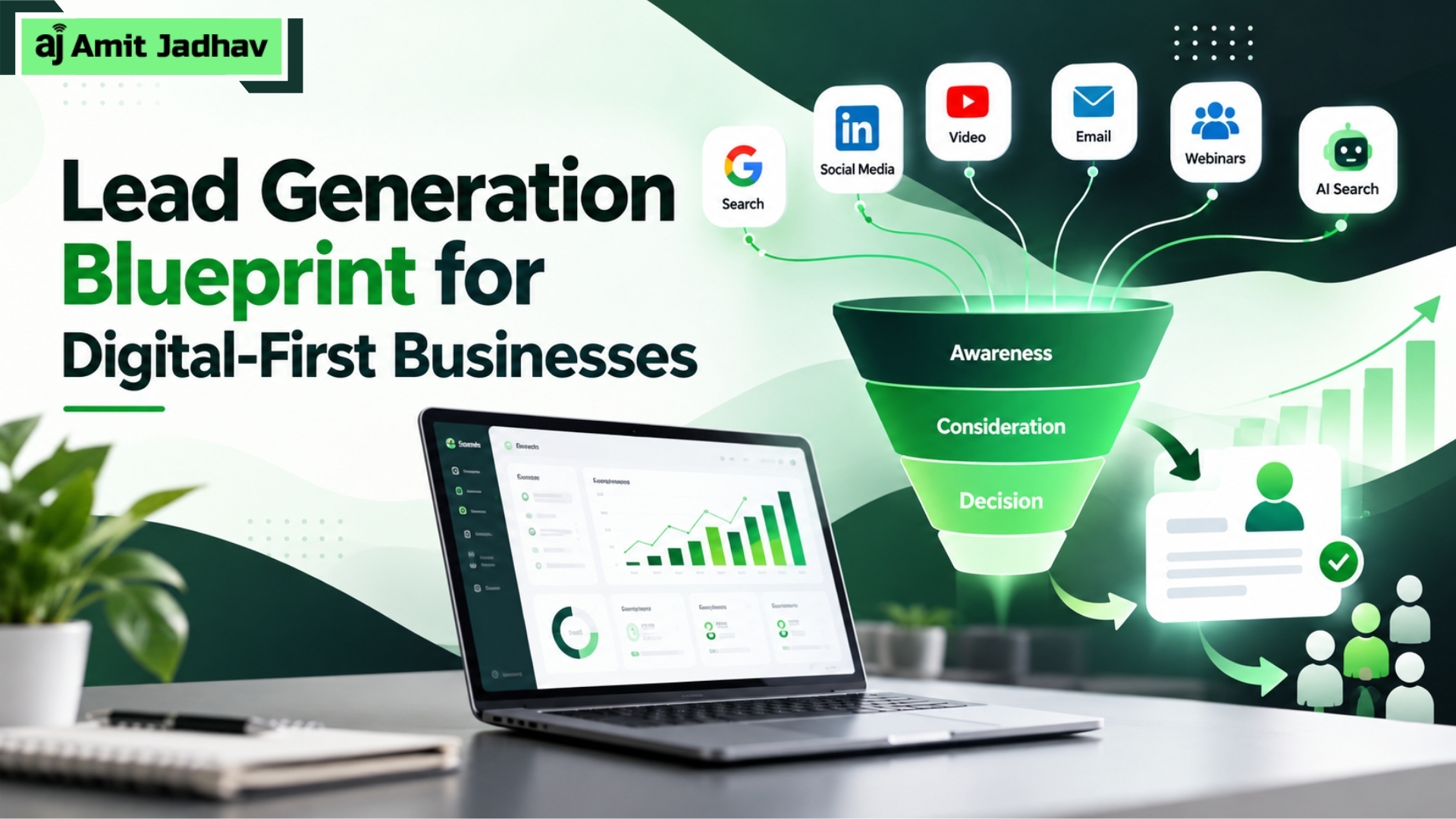
Today, customers can find businesses through Google, social media, videos, email, webinars, online communities, and AI-powered search. With so many digital touchpoints, businesses need more than scattered marketing efforts. They need a clear lead generation system that brings marketing, sales, content, data, and technology together.
What Makes Lead Generation Different for Digital-First Businesses?
A digital-first business operates in the online spaces where customers already spend much of their time. While this gives businesses more ways to reach potential customers, it also puts them in a more competitive environment.
The process starts with understanding your ideal customer. What problem are they trying to solve? What concerns or questions might they have before making a buying decision? Which platforms do they use? Which types of content can help them move closer to a purchase decision?
Once these questions are answered, businesses can develop lead generation strategies based on customer needs rather than simply promoting their products or services.
For example, a software company may attract prospects through educational blogs, LinkedIn content, webinars, and product demos. A professional service business may rely on case studies, expert videos, email campaigns, and consultation offers.
The channel may differ, but the principle remains the same: reach the right audience with the right message.
Build Lead Generation Strategies Around the Customer Journey
Effective lead generation requires a strategy that connects with customers at each stage of their journey.
During the awareness stage, inbound marketing strategies such as blogs, social media posts, videos, search content, and educational resources can help attract potential customers.
At the consideration stage, businesses can provide more detailed content, including case studies, guides, webinars, product comparisons, and demonstrations.
During the decision stage, landing pages, consultations, free trials, testimonials, and clear calls to action can encourage prospects to take the next step.
This is where sales funnel optimization becomes important. Rather than treating every visitor as a ready-to-buy customer, businesses can create experiences that match each prospect’s position in the buying journey.
Create a Digital Lead Generation Engine
Businesses can strengthen digital lead generation by connecting multiple marketing channels.
Your website can serve as the central destination, while search can attract relevant visitors, social media can build awareness and engagement, and email can keep the conversation going. Businesses can use paid campaigns to reach targeted audiences and content to answer questions before a sales conversation begins.
By providing helpful information first, content marketing for lead generation can build interest before asking visitors to take a buying decision.
For example, a blog answering a common industry question can attract search traffic. A detailed guide can encourage visitors to share their contact details, while a webinar can identify prospects with a stronger interest in a particular topic.
Rather than relying on a single channel, businesses should build an online lead generation process where different channels work together.
Optimize Every Point of Conversion
Website traffic alone is not enough for lead generation. Businesses must also find ways to convert relevant visitors into potential leads.
This is where landing page optimization and conversion rate optimization play an important role.
A landing page should communicate its value clearly within seconds. The headline, content, visuals, form, and call to action should all work toward the same goal.
Even small details can affect performance. A lengthy or complicated form may discourage visitors, while an unclear CTA may leave them uncertain about what to do next.
Track metrics such as traffic, form submissions, CTR (click-through rate), conversion rate, cost per lead, and ROI. These insights can help businesses identify which campaigns are performing well and where improvements are needed.
Combine Inbound and Outbound Lead Generation
Digital businesses do not necessarily have to choose between inbound and outbound approaches.
Outbound lead generation can help businesses proactively connect with specific prospects through email, LinkedIn outreach, targeted advertising, partnerships, or sales campaigns.
At the same time, inbound marketing helps potential customers discover a business through content, search, social media, and other digital channels.
Combining both approaches can support a more consistent pipeline. For instance, a company can publish educational content to attract organic traffic while its sales team uses targeted outreach to connect with selected accounts.
This approach is particularly useful for B2B lead generation, where buying decisions may involve multiple stakeholders.
Turn Leads Into Conversations
A new contact does not necessarily mean the prospect is ready to make a purchase.
This is where effective lead nurturing strategies become important.
Email marketing for leads can provide useful information over time. A prospect who downloads a guide today may not be ready to buy, but relevant emails, case studies, product information, and expert content can help maintain the relationship.
Marketing automation tools can simplify follow-ups, segment contacts, track interactions, and trigger relevant communications based on customer behaviour.
This also supports sales enablement. When marketing and sales teams have access to useful prospect information, sales representatives can better understand customer needs and have more relevant conversations.
Where AI Fits Into Lead Generation
AI is changing how businesses attract and acquire new customers.
AI in business can help analyze customer behaviour, identify trends, summarize prospect details, and assist with content creation. Predictive Analytics and predictive lead scoring can help sales teams prioritize prospects using available customer data.
Generative AI can support content creation, while chatbots and virtual assistants can answer common questions or direct website visitors to relevant resources.
AI-powered Data Analysis can also help marketers identify which campaigns drive engagement and which channels contribute to conversions.
However, AI should complement the process rather than replace human understanding. Customer engagement, trust, and satisfaction still depend on how effectively a business understands its audience.
Measure, Learn, and Improve
A successful lead generation system cannot simply be created and left unchanged.
Businesses should regularly evaluate marketing and sales performance. Review which channels bring qualified prospects, which landing pages generate conversions, which content attracts engagement, and which campaigns contribute to revenue.
This is where sales optimization and conversion rate optimization work together.
Instead of looking only at the number of leads generated, businesses should consider other performance factors. They should ask:
- Which source generated the most qualified prospects?
- Which content contributed to conversions?
- What was the customer acquisition cost?
- What ROI did each campaign deliver?
- Where are prospects leaving the funnel?
These findings can help businesses identify opportunities to strengthen their customer acquisition efforts.
A Practical Blueprint for Getting More Leads Online
For businesses aiming to generate leads for business, the process can be broken down into five steps:
1. Define your ideal customer: Understand their challenges, goals, industry, and buying behaviour.
2. Choose the right channels: Focus on platforms where your target customers are actively present.
3. Create useful content: Use blogs, videos, guides, webinars, case studies, and other formats to address customer questions.
4. Automate and nurture: Use marketing automation, email campaigns, chatbots, and CRM systems to maintain meaningful communication.
5. Measure and optimize: Monitor CTR, conversions, qualified prospects, customer acquisition cost, and ROI.
Build a Lead Generation System That Can Scale
For a digital-first business, growth is not simply about attracting more website visitors. It is about building a repeatable process that turns attention into valuable business opportunities.
A well-planned lead generation for business strategy brings content, marketing, sales, automation, AI, and customer data together within one connected system.
Whether you are a startup looking to increase leads for my business, a growing B2B company exploring B2B lead generation India, or an established organization seeking online lead generation India, the core principles remain similar: understand your audience, provide value, simplify conversion, nurture relationships, and measure results.
Businesses looking to get more leads online can begin by improving one stage of the customer journey at a time. The objective is not to be present everywhere, but to build a focused and measurable system that consistently connects the right prospects with the right business solution.
For more knowledge about lead generation, you can check out our blog post, “How to Build a Lead Generation System That Converts?”
- Amit Jadhav
www.amitjadhav.com