
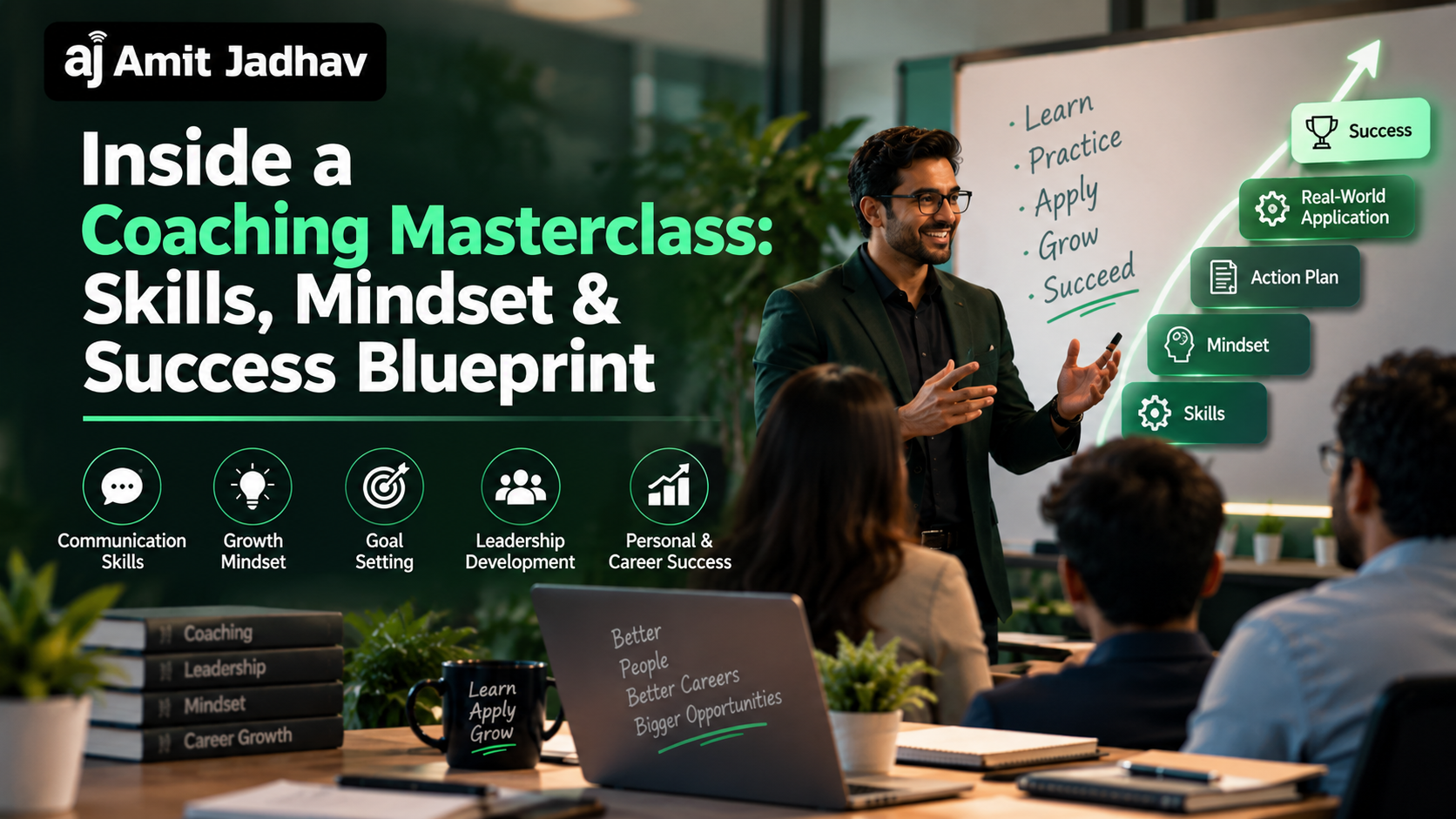
Inside a Coaching Masterclass: Skills, Mindset & Success Blueprint
About a Coaching Masterclass
A coaching masterclass is about much more than learning how to coach someone. It helps participants understand people better, develop a growth-oriented mindset, strengthen practical skills, and learn how to turn what they learn into real-world action.
Today’s professional environment is constantly changing, and coaching has evolved beyond simply offering advice or motivation. Professionals, entrepreneurs, managers, and aspiring coaches are increasingly looking for structured guidance to improve areas such as confidence, communication, decision-making, leadership, and overall performance.
What to Expect from a Coaching Masterclass
A well-structured coaching masterclass focuses on practical learning rather than theory alone. Participants can explore how coaching techniques work in real-life situations and learn how to apply them to different personal and professional challenges.
The learning can cover areas such as communication, goal setting, problem-solving, confidence building, leadership, productivity, and business development. Participants may also learn how to ask meaningful questions, listen carefully, understand different viewpoints, and help individuals identify practical steps toward their goals.
Coaching is not limited to people who want to become professional coaches. Managers, entrepreneurs, HR professionals, trainers, and working professionals can also benefit from coaching classes for professionals to strengthen their people and leadership skills.
Building Practical Skills for Effective Coaching
A key part of professional coaching training is learning skills that can be applied in real conversations and situations.
Good communication is essential for a coach, but it involves more than simply speaking clearly. Active listening is equally important. A coach needs to understand what a person is trying to communicate, identify the actual concern, and ask thoughtful questions that encourage deeper thinking.
Some of the important areas covered in coaching may include:
- Decision making skills coaching
- Effective communication and active listening
- Goal setting and creating action plans
- Confidence building coaching
- Time management and productivity
- Problem-solving techniques
- Leadership and team-building skills
These skills can also be useful in career guidance coaching, particularly when people need support in understanding their strengths, exploring career options, or deciding on their next professional move.
Developing the Right Mindset for Coaching
Having practical skills is important, but an effective coach also needs the right mindset.
Patience, empathy, curiosity, self-awareness, and a willingness to learn continuously can help a coach build better connections with people. Rather than simply telling someone what to do, a coach encourages them to examine their situation, think through their challenges, and discover possible ways forward.
This is where personal growth coaching can make a meaningful difference. Personal development is about more than just reaching your career goals. It can also involve recognizing personal strengths, working through limiting beliefs, building confidence, and gaining greater clarity about one's goals and direction.
A structured mindset coaching program can help participants understand how their thoughts and beliefs can influence their choices, behaviour, and results.
For aspiring coaches, developing this self-awareness is especially valuable. Understanding their own habits, strengths, beliefs, and areas for improvement can help them become more thoughtful and effective when supporting others.
Creating a Personal Success Blueprint
No two people have the same goals, experiences, or challenges. Because of this, coaching cannot follow a one-size-fits-all approach. A personal success plan should take into account where a person is today, what they want to achieve, and what may be holding them back.
A simple coaching framework can start with four questions:
Where am I right now?
Look at your current situation, strengths, challenges, skills, and available resources.
Where do I want to go?
Set a clear personal or professional goal and define what you want to achieve.
What could be holding me back?
Identify possible barriers, skill gaps, habits, or mindset-related challenges that may be slowing your progress.
What should I do next?
Turn your goal into practical steps and track your progress along the way.
This kind of structured approach can be useful in a career coaching program India setting, as well as for entrepreneurs and professionals who want to improve their performance and work toward specific goals.
Coaching for Leadership and Professional Growth
Coaching has become increasingly relevant in the workplace because effective leadership involves much more than assigning tasks and monitoring results. Leaders need to communicate with their teams, make informed decisions, adapt to changing situations, and create an environment where people can perform effectively.
A leadership coaching masterclass may cover areas such as communication, delegation, accountability, conflict management, decision-making, and employee motivation. These skills can help managers handle everyday workplace challenges with greater clarity.
Organizations can also bring coaching principles into corporate coaching programs India, employee development training, and leadership coaching for managers.
The focus is practical: helping employees and leaders strengthen their communication, solve problems, manage teams effectively, and contribute to broader organizational goals.
Learn more about how a coaching masterclass can support your professional growth by reading our blog post, “Why Coaching Masterclasses Are the Future of Personal & Professional Growth!”
How AI and Digital Tools Are Changing Modern Coaching
Technology is becoming an important part of how professionals learn, work, and manage their daily activities. Today, AI in business is being used for tasks such as automation, data analysis, content creation, customer engagement, and decision support.
For coaches and consultants, AI-driven tools can help reduce repetitive work and provide assistance with research, content development, Data Analysis, and communication. This allows professionals to spend more time focusing on their clients and the areas that require personal attention.
Technologies such as Generative AI, natural language processing, multimodal AI, and automation are also creating new opportunities for learning and improving productivity. However, these tools should complement human interaction rather than replace it.
Coaching is ultimately about understanding people—their goals, concerns, experiences, emotions, and individual situations. AI can provide useful information and digital support, but empathy, active listening, and genuine human connection remain important parts of an effective coaching relationship.
Turning Coaching Skills Into a Coaching Business
Becoming a coach involves more than learning coaching techniques. Professionals who want to build a coaching career also need to understand how to develop their brand, reach potential clients, communicate their value, and manage their business effectively.
This is where areas such as sales enablement, customer engagement, marketing automation, content creation, and conversion rate optimization can support a coaching business.
For instance, a coach can use content creation to share knowledge and build credibility, while marketing automation can help maintain communication with potential clients. Performance metrics can then help track how different activities are performing. Measures such as ROI, CTR, customer satisfaction, and conversion rates can provide useful information when reviewing business efforts.
Amit Jadhav's coaching offering takes this broader view of coaching. His website describes the Coaching Masterclass as a program based on his experience in coaching and entrepreneurship, with a focus on areas such as building a coaching brand, developing marketing strategies, and using technology to grow a coaching business.
Why Practical Learning Makes a Difference
Learning coaching concepts from books, articles, or presentations can build knowledge, but real understanding comes from putting those ideas into practice.
A coaching masterclass in India can offer a structured learning environment where participants can explore coaching techniques, discuss real-world situations, ask questions, and understand how different approaches can be used in practical settings.
The same idea applies to a personal development workshop Pune, a confidence building workshop India, or a leadership training workshop India. What matters is how participants apply the knowledge and skills in their personal or professional lives.
For students, coaching for student career guidance can help them understand their interests, recognize their strengths, explore educational options, and think about possible career paths. Professionals, on the other hand, may use coaching to reflect on career choices, leadership roles, workplace challenges, or personal goals.
Turning Knowledge Into Action
The real value of any learning program becomes clear when participants start applying what they have learned.
Instead of simply walking away with notes and information, participants should have a clearer idea of their goals, the areas they want to improve, and the steps they can take next.
Whether someone chooses to join coaching masterclass online, attend an in-person program, or take part in a professional development session, regular practice and application can help turn new knowledge into useful skills.
Amit Jadhav's wider training portfolio also covers areas such as AI, LinkedIn, digital marketing, and social selling, along with coaching. His website highlights experience across entrepreneurship, speaking, sales, marketing, and technology.
Conclusion
A coaching masterclass brings together three key elements: skills, mindset, and action.
Practical skills can help people communicate, solve problems, and coach more effectively. A positive and growth-oriented mindset provides a foundation for continuous learning and personal development. A clear action plan then helps turn ideas into achievable steps.
For aspiring coaches, professionals, managers, entrepreneurs, and people interested in personal development, coaching can provide a structured way to understand challenges, set meaningful goals, and work toward them.
Technology is also becoming part of the coaching landscape. AI, automation, data analysis, and digital platforms can support learning and business activities, while human qualities such as empathy, understanding, and personal connection remain important to the coaching process.
Ultimately, effective coaching is about more than gaining knowledge. It is about learning, reflecting, taking purposeful action, and continuing to grow.
- Amit Jadhav
www.amitjadhav.com