
Agentic AI & AI Agents for Business Growth
Agentic AI is not the next chapter in AI. It is a different book entirely.
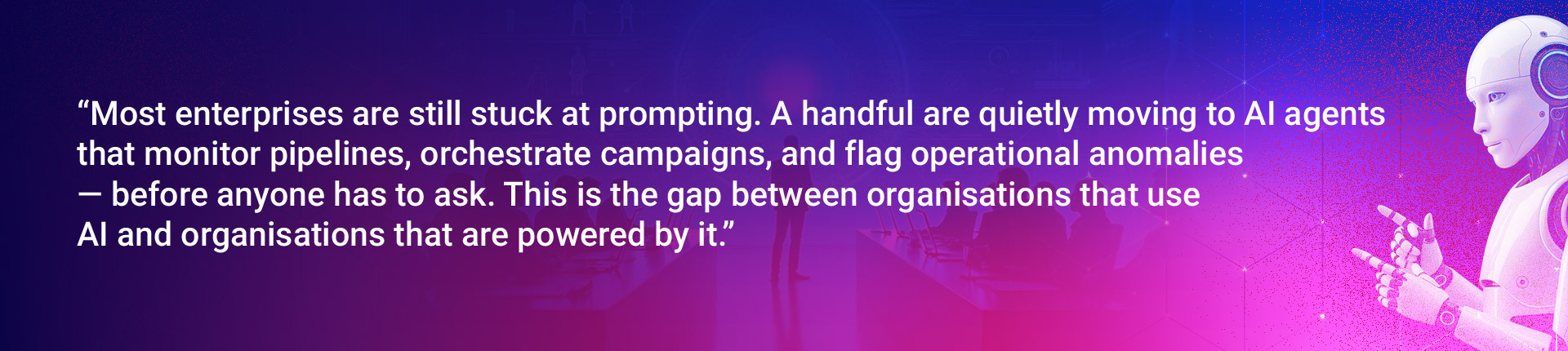
Until now, AI has been reactive: you ask, it answers. Agentic AI flips that model. AI agents observe your business environment, plan sequences of actions, make decisions within defined parameters, and execute — without waiting to be prompted at every step.
For business leaders, this matters for one simple reason: most of the cost and delay in your organisation today is not strategic. It is operational friction. Chasing approvals. Reformatting reports. Manually routing tickets. Following up on proposals. These are the tasks that consume your highest-paid people — and they are exactly what AI agents are built to eliminate.
What Is Agentic AI? A Working Definition for Business Leaders
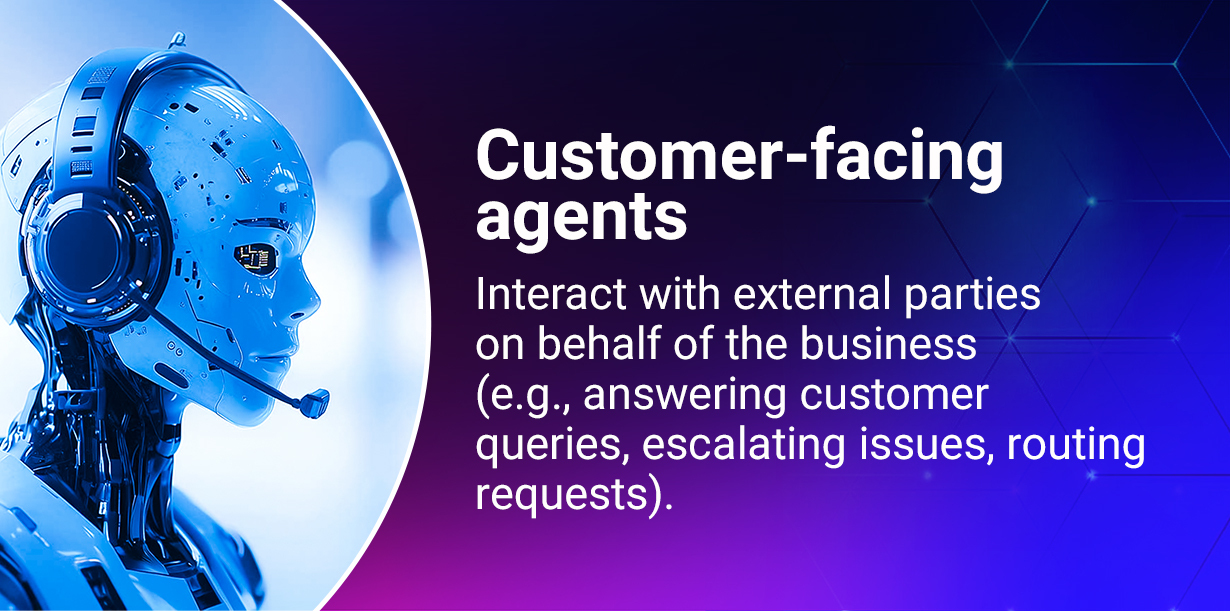
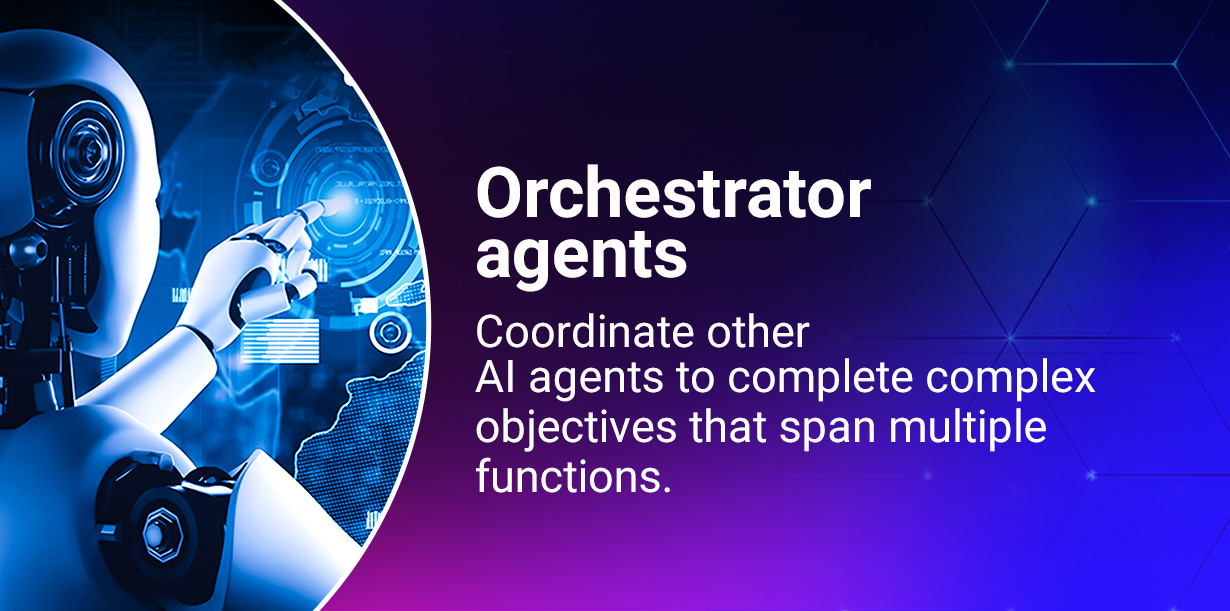
Agentic AI refers to AI systems that can pursue goals acrossmultiplesteps, using tools, APIs, and data sources, without requiring human input at every stage. Unlike a chatbot or a generative AI model that waits for prompts, an AI agent is given an objective and a set of capabilities — and it works out the path to get there.
Think of it this way: a standard AI model is a brilliant analyst who answers whatever question you put in front of them. An AI agent is that same analyst, but now they have access to your CRM, your inbox, your calendar, and your reporting tools — and they can take action across all of them based on standing objectives.
Agentic AI vs Traditional Automation: What Is Different?
If you have used RPA (Robotic Process Automation) or workflow tools like Zapier, you understand rule-based automation: if A happens,doB.That model works well for structured, predictable processes. It breaks down the moment conditions change or exceptions arise.
Agentic AI operates differently. It reasons aboutcontext,adapts to changing conditions, handles exceptions without human escalation, and can work across unstructured data — emails, documents, conversations — not just structured database fields.
| Dimension | Traditional Automation / RPA | Agentic AI |
|---|---|---|
| Decision logic | Fixed if/then rules | Contextual reasoning |
| Handles exceptions | Breaks, needs manual fix | Adapts and escalates intelligently |
| Data types | Structured only | Structured + unstructured |
| Learning | Static rules | Improves with feedback |
| Setup effort | High (process mapping) | Lower with no-code tools |
| Best for | Stable, high-volume tasks | Variable, judgment-heavy tasks |
High-Impact Use Cases of AI Agents Across Business Functions
AI Agents for Sales and Revenue Growth :
The average sales rep spendsonly 28% of their week actually selling.
The rest is admin: logging calls, updating CRM fields, writing follow-up emails, researching prospects. AI agents are changing that ratio.
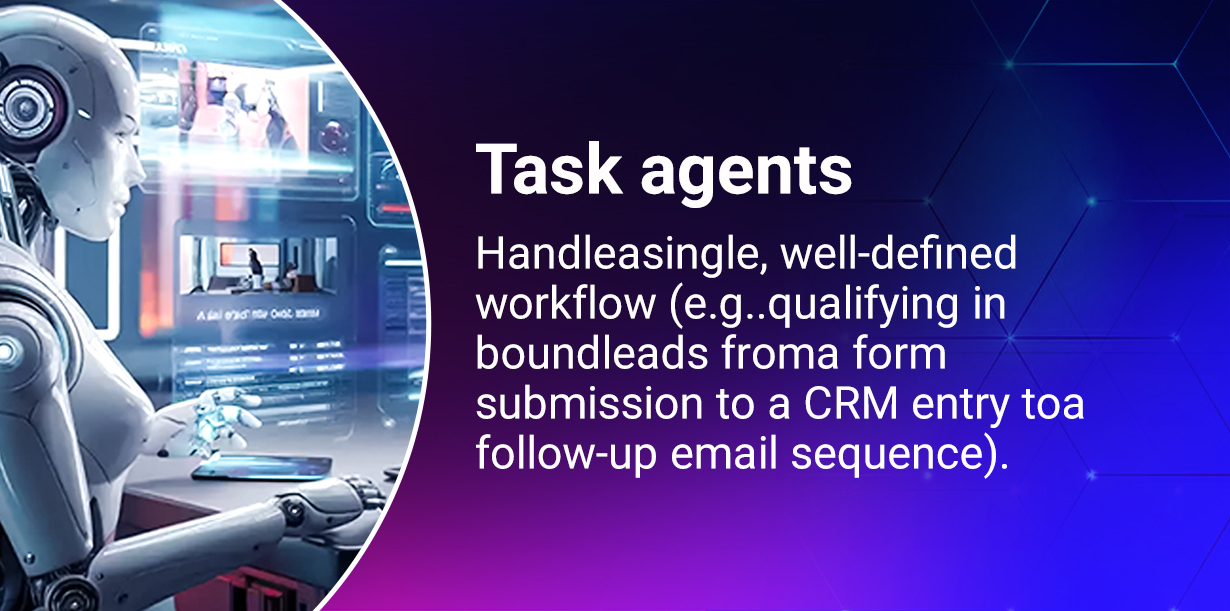
- Prospect identification and outreach:Agentsscan LinkedIn, news feeds, and intent data to identify ideal targets and draft personalised out reach sequences.
- CRM hygiene: Agents listen to sales calls, extractactionitems, and update CRM records automatically — no manual entry.
- Follow-up orchestration: Agents trackdealstagesandsendcontextualfollow-upsatoptimal times without rep involvement.
- Proposal generation: Agents pull relevantcasestudies, pricingdata,andclientcontextto assemble first-draftproposals for repreview.
AI Agents for Marketing Operations :
- Campaign orchestration: Agentsmanage multi-channel campaign execution — content scheduling, A/B testing, bid adjustments — within defined parameters.
- Content pipeline: Agents brief, draft, review for brand voice, and schedule content across blog, social, and email.
- Lead scoring and nurturing: Agents score inbound leads in real time and route them through appropriate nurture sequences.
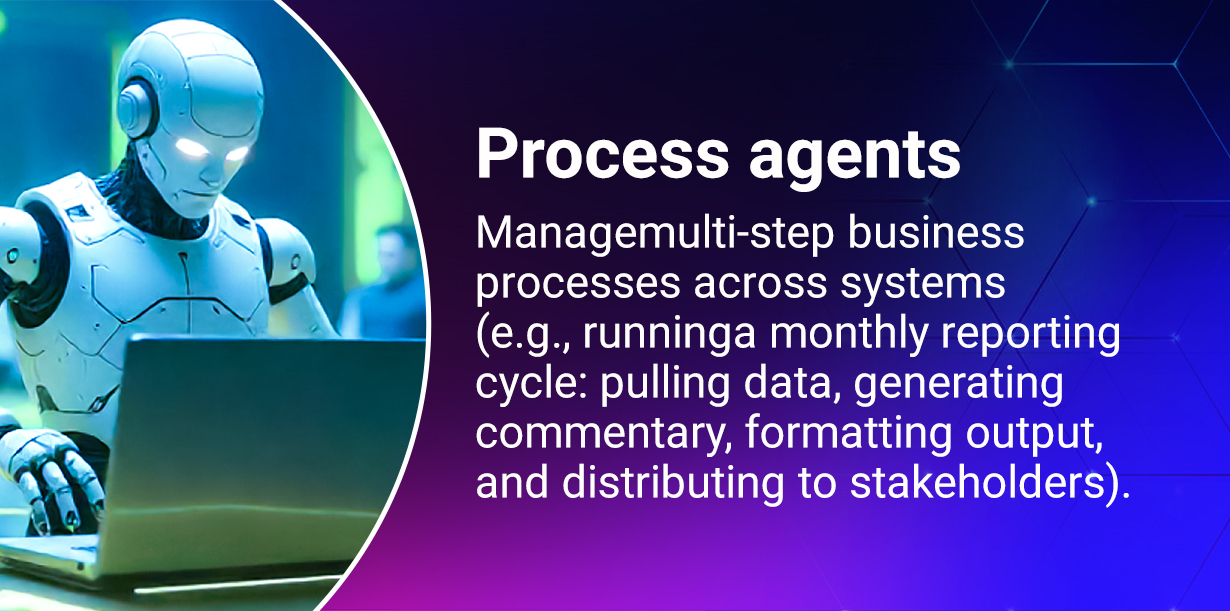
- Reporting: Agents pull data from multiple platforms, generate performance commentary, and distribute weekly reports.
AI Agents for Operations and Support :
- ITservicedesk: Agentshandle tier-1 support tickets, resolve common issues autonomously, and escalate complex cases with full context.
- Procurement: Agents monitor supplier feeds, flag anomalies, initiate reorder workflows, and generate purchase requisitions.
- Compliance monitoring: Agents scan documents, flag risk items, and generate audit-ready summaries.
- HR operations: Agents handle onboarding task sequences, benefits queries, leave management, and policy lookups.
How to Design Your First AI Agent — Without Writing Code
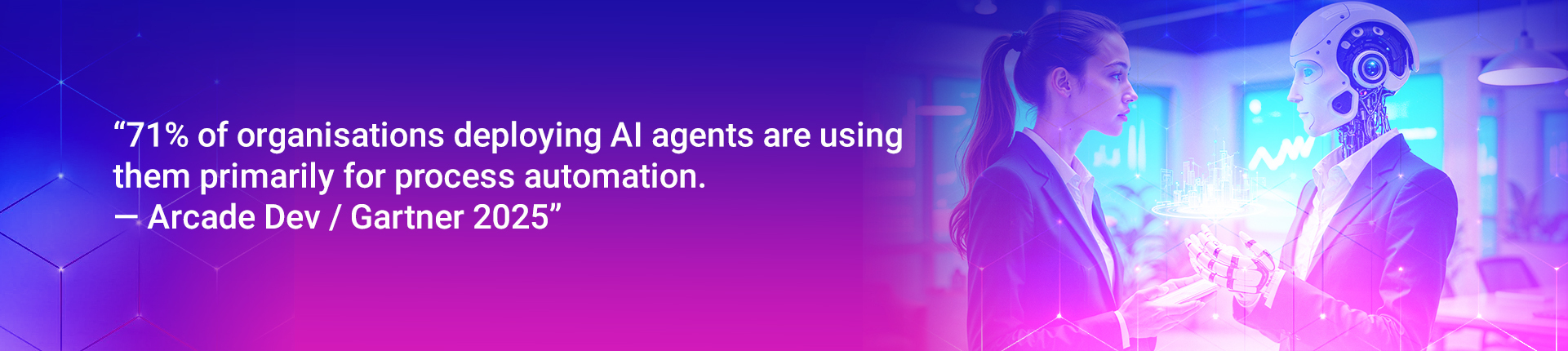
Building an AI agent no longer requiresadeveloper. Platforms like n8n, Make (formerly Integromat), Zapier AI, and MicrosoftCopilot Studio allow business teams to design, test, and deploy agents using visual, no-codeinterfaces.
The key is starting with the right usecase— not the most exciting one, but the one with the highest frequency, clearest inputs andoutputs, and lowest risk tolerance for error.
Governance, Risk, and Compliance for Agentic AI
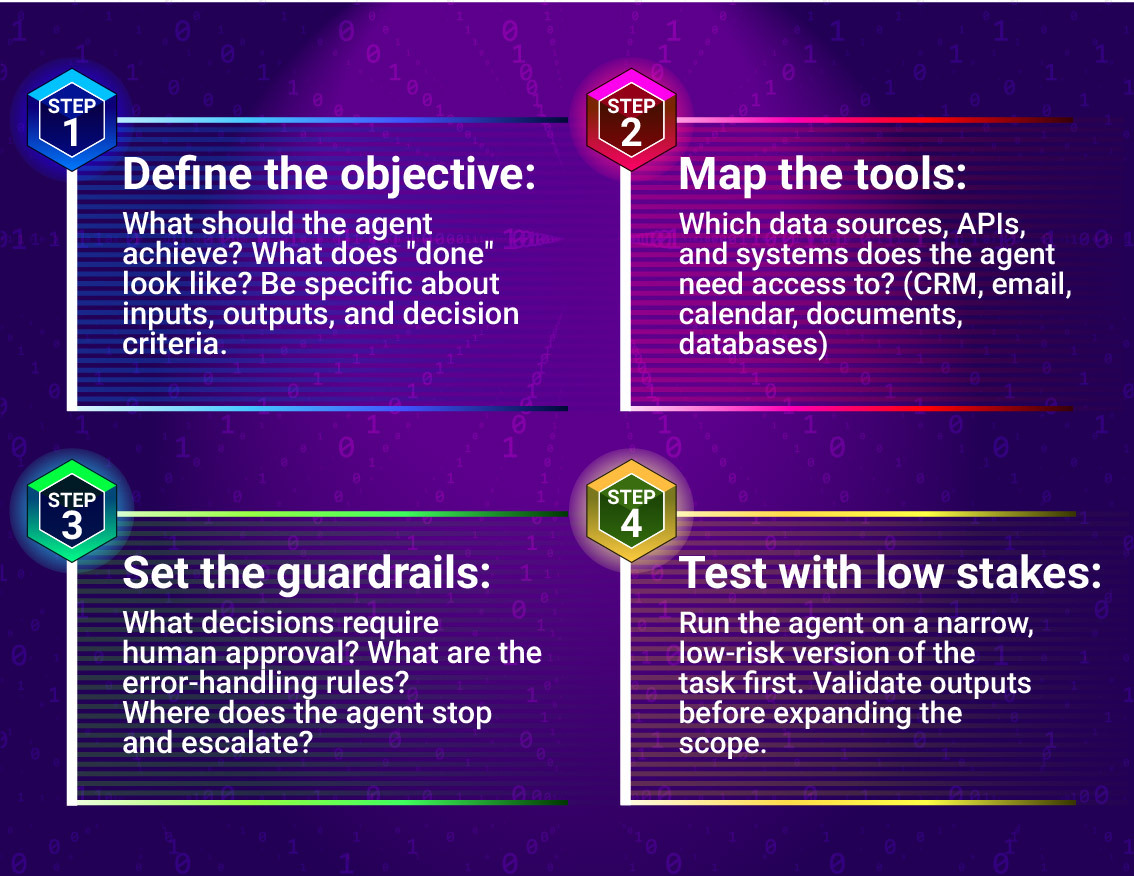
Agentic AI introduces a new category of operational risk: autonomous systems making decisions at machine speed, across multiple business touchpoints, with limited human oversight at each step. This is not a reason to avoid agents — it is a reason to govern them properly.
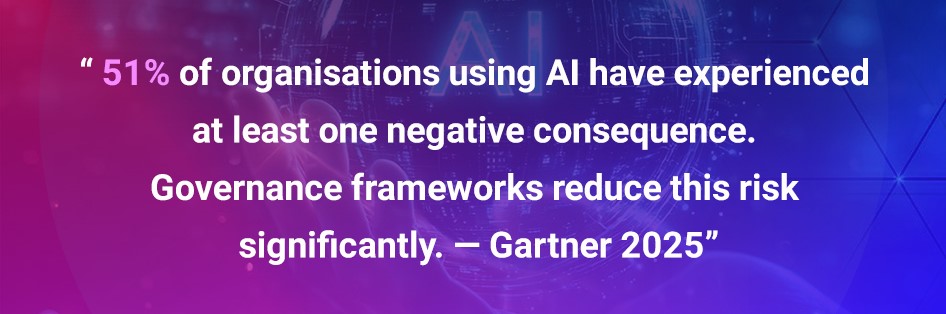
Three governance principles every enterprise should establish before deploying AI agents:
- Authorisation boundaries: Everyagent should have a clearlydefinedscope of authority. What canitdecide alone? What mustit escalate? Build approvalcheckpoints for high-stakes actions.
- Auditability: Every agent action should be logged and explainable. You must be able to trace why an agent took a specific action and review it after the fact.
- Human-in-the-loop by design: For consequential decisions — pricing, client communication, procurement above a threshold — build mandatory human review into the workflow.
Agentic AI in a Mid-Sized Services Firm (Anonymised)
A 400-person professional services firm was spending an estimated 3,200 person-hours per month on three activities: generating client status reports, updating project management tools after weekly calls, and routing inbound enquiries to the right team.
Using a no-code agentic AI setup built across three interconnected agents, the firm automated 80% of these activities within a 90-day pilot. The outcome: approximately 640 person-hours reclaimed per month, an 18% reduction in project admin overhead, and a measurable improvement in client response times from 48 hours to under 6 hours.
The agents did not replace anyone. They took over the operational overhead so the team could focus on delivery and client relationships — where the real commercial value lies.
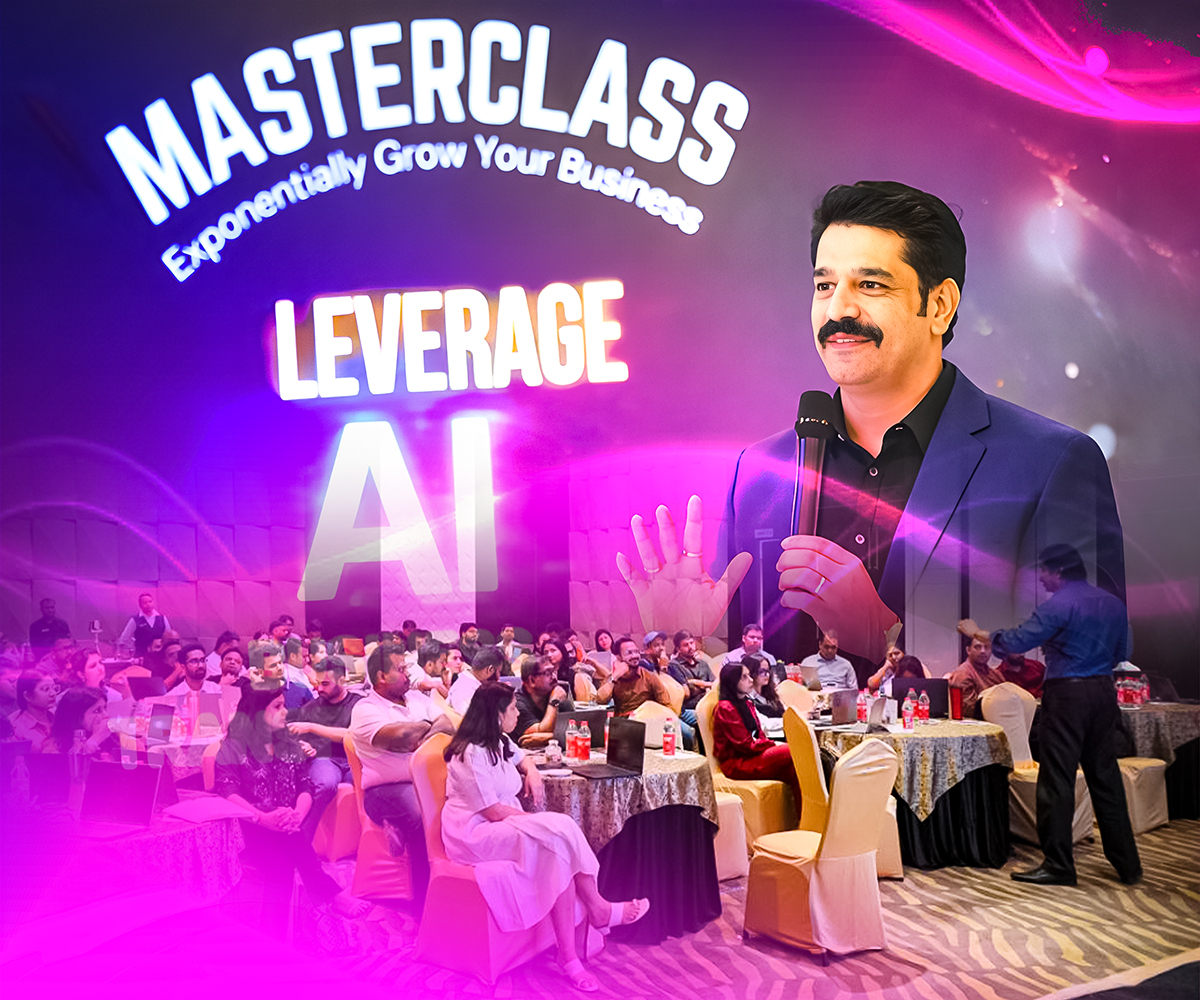
How Amit Jadhav Helps You Implement Agentic AI
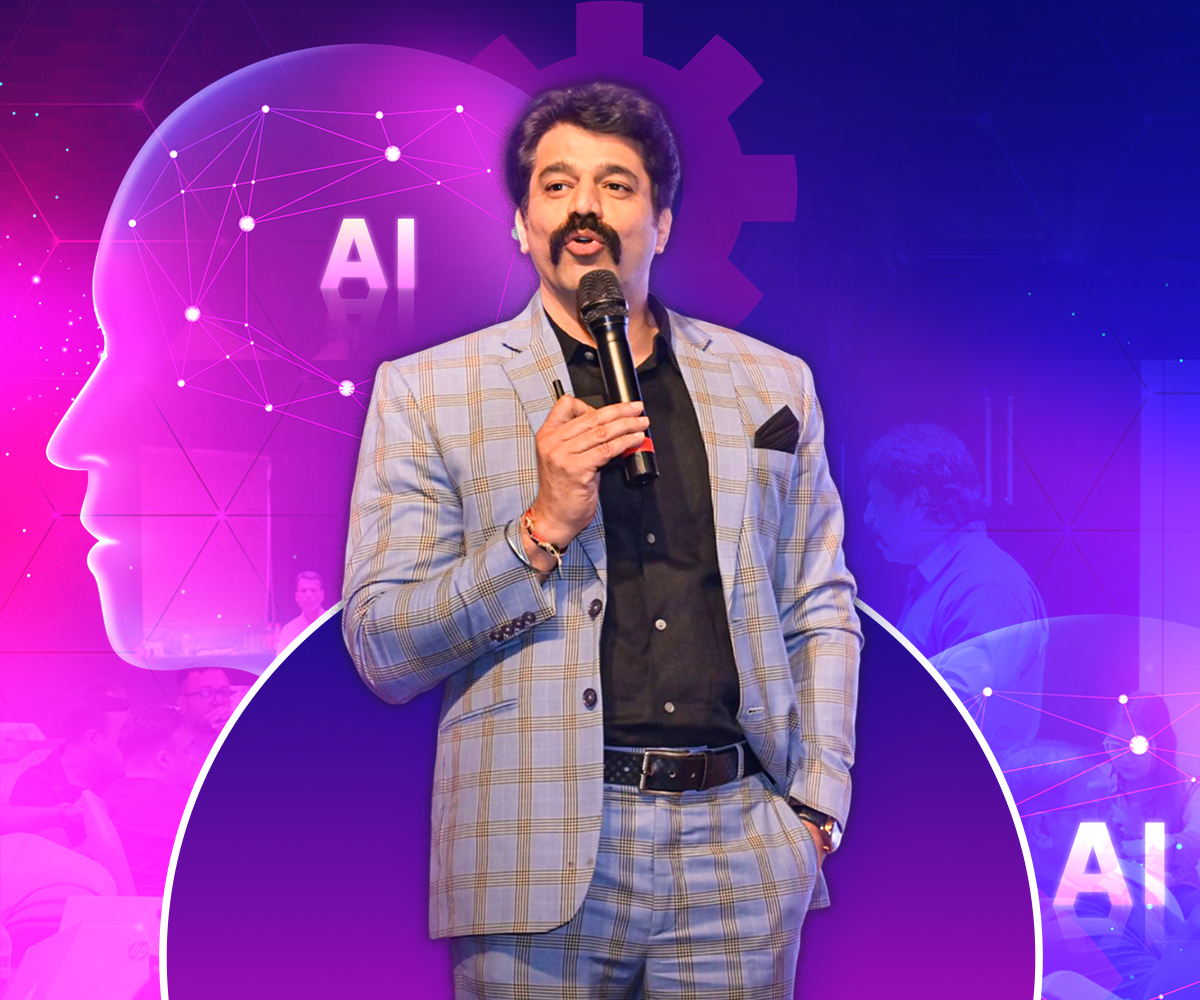
Amit Jadhav's work with enterprises on agentic AI is built around one principle: practical deployment in weeks, not months. The engagement typically runs across three phases
- Diagnostic (Weeks 1–2):Identify the 3–5 highest-value agentic AI usecases in your business. Assessdatareadiness, existing tooling, and organisational capacity
- Design & Pilot (Weeks 3–8):Build and deploya no-code agent for the lead usecase. Define governance framework and train the team to manage and iterate the agent.
- Scale & Replicate (Weeks 9–16):Apply the proven blue print to the next 2–4 use cases. Build internal capability so your team can design future agents independently
Ready to explore agentic AI for your organisation?

Frequently Asked Questions — Agentic AI
Q. What is the difference between generative AI and agentic AI?
A. Generative AI produces outputs —text, images, code — in response to prompts. Agentic AI takes this further: it can plan a sequence of actions, use tools and APIs, and execute tasks across multiple steps to achieve a defined goal. Generative AI is a capability; agentic AI is a system built around that capability to get things done autonomously.
Q. Do we need developers to build AI agents?
A. Not for most business use cases. No-code platforms like n8n, Make, Zapier AI, and Microsoft Copilot Studio allow business users to design and deploy agents using visual drag-and-drop interfaces. For complex, custom integrations into enterprise systems, developer support may help — but the majority of high-value business agents can be built without code.
Q. How long does it take to deploy a first AI agent?
A. For a well-scoped, single-function agent (e.g.,lead qualification, CRM update automation, report generation), a no-code deployment can be operational within 2–4 weeks. More complex, multi- system agents with governance frameworks typically take 6–10 weeks for a production-ready deployment.
Q. What are the biggest risks of deploying AI agents in an enterprise?
A. The primary risksare: unauthorised actions (agents acting outsidetheir intended scope), data privacy exposure (agents accessing sensitive information without appropriate controls), audit trail gaps (inability to explain why an agent took a specific action), and quality degradation (agents producing incorrect outputs that propagate downstream). All of these are addressable through proper governance design before deployment.
Q. What is the ROI of AI agents for enterprises?
A. ROI varies significantly by use case and organisation. Process automation agents in sales and operations typically show payback within 3–6 months through time savings. Customer-facing agents can reduce service costs by 20–40% over 12 months. The most reliable approach is to start with a single high-frequency, measurable use case, establish a baseline, and measure time and cost impact at 30, 60, and 90 days.
Q. Can AI agents be deployed in regulated industries like BFSI or healthcare?
A. Yes, with appropriate governance controls. Regulated industries require stricter authorisation boundaries, mandatory human review for consequential decisions, full auditability, and data handling compliant with local regulations. Agentic AI pilots in BFSI, healthcare, and legal have succeeded when governance frameworks are built into the design from day one — not retrofitted.
Q. How is agentic AI different from RPA?
A. RPA (Robotic Process Automation) follows rigid, pre-defined rules to replicate human actions on screen. It is brittle — any change in the interface or process breaks the automation. Agentic AI reasons about context, handles exceptions, processes unstructured inputs like emails and documents, and can adapt its approach based on conditions. The two can be complementary: RPA for structured, stable tasks; AI agents for variable, judgment-heavy workflows.
Q. Is Amit Jadhav available for an agentic AI workshop or consulting engagement in India and the USA?
A. Yes. Amit delivers agentic AI workshops, executive briefings, and consulting engagements in India and globally, including virtual formats for US-based teams. Engagements can be tailored to a single function (e.g., sales automation) or an enterprise-wide agentic AI roadmap. To discuss your specific context, use the Discovery Call booking link on this page.